
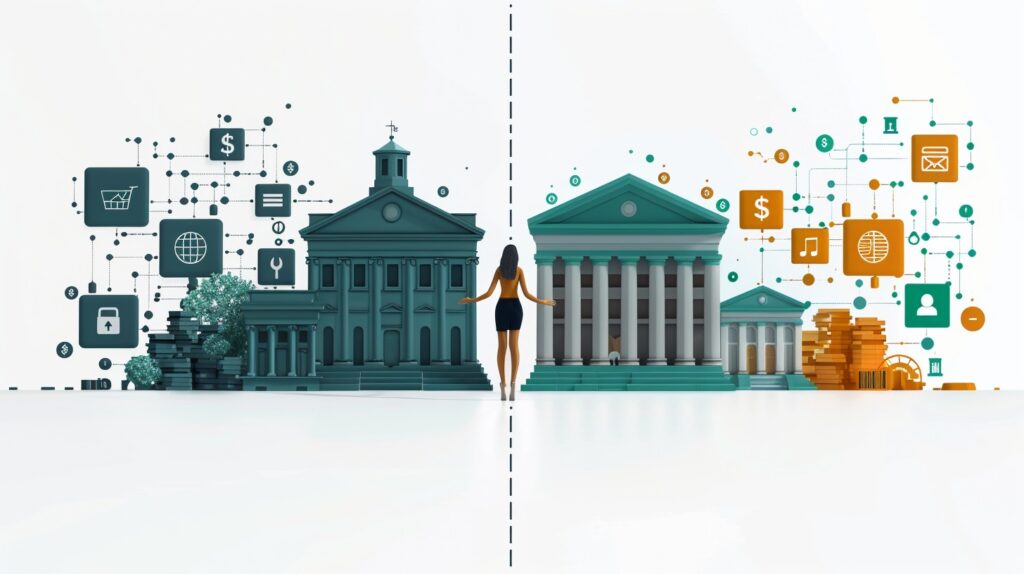
When it comes to accessing financing or investing in innovative opportunities, both micro loans and P2P lending have emerged as key players in the field. These financial systems not only provide borrowers with essential funds but also open doors for investment projects aiming to drive growth and innovation.
By understanding their characteristics, individuals and businesses can make informed decisions that align with their financial goals, whether it’s funding personal ventures or exploring lucrative investment projects.
What are micro loans?
Micro loans are small-scale loans provided by microfinance institutions (MFIs) or small finance banks to individuals or groups with limited access to traditional banking services. These loans are designed to promote entrepreneurship, income generation, and financial inclusion, particularly in rural and semi-urban areas.
Example:
Take Ramesh, for instance. He runs a small grocery store in a village but lacks access to traditional banking services due to an absence of credit history. To fund his expansion plans, Ramesh can rely on a microfinance institution for the financial support he needs.
Micro loans usually come with shorter repayment periods compared to conventional bank loans. This enables borrowers to clear their debts quickly and potentially secure subsequent loans for future business growth.
What Is P2P lending?
Peer-to-peer (P2P) lending is a digital financing model that connects borrowers and lenders directly through an online platform, eliminating the need for traditional financial institutions. These platforms serve as marketplaces where individuals can lend or borrow money on their terms.

Unlike micro loans, P2P lending is open to a wider audience. Borrowers with a strong credit score and a steady income can access these platforms, while lenders can earn competitive returns. An added advantage is that P2P lending often features lower interest rates than traditional banks, as transactions bypass intermediaries, reducing overall borrowing costs.
Example:
Consider Priya, who wants to renovate her house. Instead of approaching a bank, she applies for a loan through a P2P lending platform. Here, individual lenders assess her creditworthiness and offer loans at lower interest rates tailored to her needs.
Micro Loans vs. P2P lending: a comparison
To better understand the differences between micro loans and P2P lending, let’s break them down across key parameters:
1. Eligibility criteria
- Micro loans: Targeted at individuals or groups with limited access to formal banking services.
- P2P lending: Open to anyone with a good credit score and steady income.
2. Loan amount
- Micro loans: Typically small amounts, ideal for entrepreneurial ventures or income-generating activities.
- P2P lending: Loan amounts can vary, with higher sums available depending on the borrower’s creditworthiness.
3. Interest rates
- Micro loans: Interest rates depend on the lending institution and the borrower’s profile.
- P2P lending: Competitive rates, as borrowers negotiate terms directly with lenders.
4. Repayment period
- Micro loans: Shorter repayment periods to facilitate quick loan turnover.
- P2P lending: Flexible repayment options based on agreements between borrowers and lenders.
5. Borrower-lender relationship
- Micro loans: Borrowers interact directly with the microfinance institution.
- P2P lending: Borrowers communicate directly with individual lenders through the platform.
6. Collateral requirement
- Micro loans: Generally do not require collateral.
- P2P lending: Collateral requirements may vary based on the lender’s preferences.
7. Level of regulation
- Micro loans: Governed by microfinance institutions or small finance banks.
- P2P Lending: Regulated by the Reserve Bank of India (RBI) under specific guidelines for peer-to-peer platforms.